
17 Fire Safety Tips Every Home Owner Should Know
Our Home is a place of safety, comfort, and warmth. However, fire accidents can occur unexpectedly and can turn a peaceful home environment into a dangerous situation within moments. There can be serious emergencies with a small spark, faulty wiring, or an unattended stove. Today, modern homes are designed with enhanced safety standards, but homeowners should be well aware of simple precautions and fire safety.
Understanding and following simple fire safety precautions can help reduce fire-related accidents. Fire safety is not about using the right equipment, but it is about adopting some safety habits that reduce potential risks. In this blog, we will go through 17 important safety tips that every homeowner should know.
Below are 17 important fire safety tips every homeowner should know.
1. Smoke Alarms Should be Installed in Key Areas
One of the most important safety devices in any home is a smoke alarm. They act as an early detector by detecting smoke and alerting occupants before the fire spreads.
Install smoke detectors in bedrooms, hallways, living rooms, and on every level of the home.
Regular testing and replacing batteries once a year is recommended. Properly functioning smoke alarms can help to save lives by providing sufficient time to evacuate during an emergency.
2. Keep Fire Extinguishers Accessible
A Fire Extinguisher is the next important fire safety tool that should be kept in every home at accessible places like the kitchen, garage, or near heating equipment. Learn the PASS Technique for using a fire extinguisher: &nsbp;- Pull the safety pin
- Aim at the base of the fire
- Squeeze the handle
- Sweep from side to side
3. Electrical Appliances should be handled with Care
Many times, Houses catch fire because of a fault in the electrical appliances. Overloaded outlets, damaged cords, and faulty appliances can easily cause sparks or overheating.
Always, avoid plugging multiple high-power devices into one outlet. Always check your wiring, avoid overloading sockets, and call the best electrician in Dubai. If you notice unusual signs like burning smells or unstable lighting.
4. Practice Safe Cooking Habits
At times, cooking can also cause household fires. Try not to leave cooking unattended, especially when you are frying or grilling something.
Flammable materials such as kitchen towels, curtains, and paper products should be kept away from the stove. If a grease fire occurs, cover the pan with a lid rather than using water.
5. Store Flammable Materials Safely
There are many regular household items that are flammable, including cleaning chemicals, gasoline, paint, and aerosol sprays, which can catch fire easily.
Always store these items in cool and ventilated areas away from heat sources. Keep these containers sealed and out of reach of children.
6. Maintain Heating Equipment
Heating appliances such as fireplaces, heaters, and chimneys can cause fire hazards if neglected and not properly maintained
Furniture, Curtains, and Bedding should be kept three feet away from these appliances. Regular cleaning of fireplaces and chimneys can help prevent dangerous soot buildup.
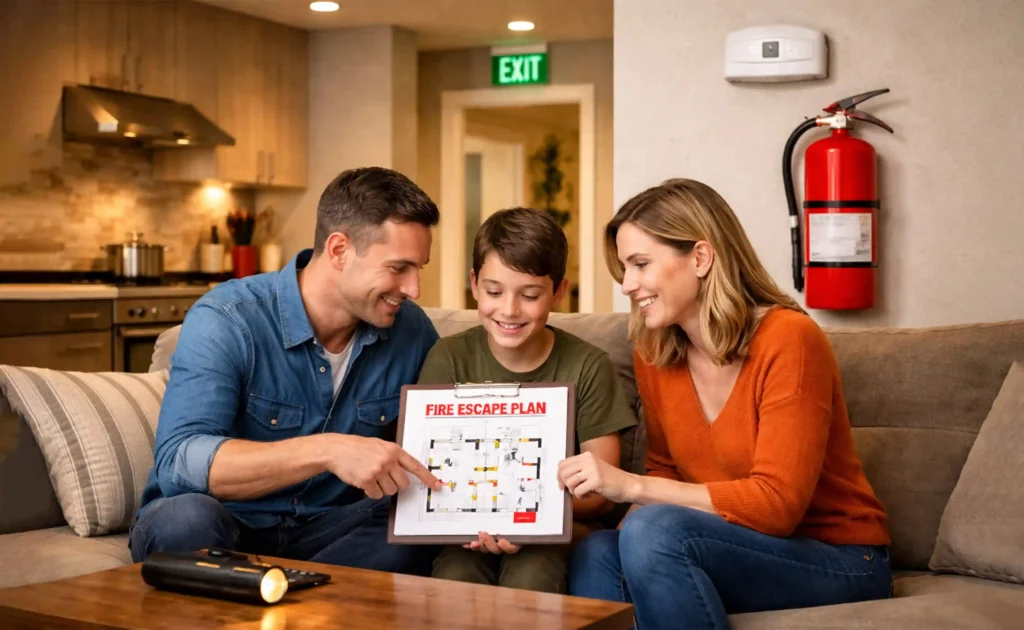
7. Create and Practice a Fire Escape Plan
A Fire Escape Plan is mandatory for every household. Locate at least two exit routes from every room and ensure that doors and windows can easily open.
Identify a safe meeting point outside the house and conduct fire drills regularly so that every family member knows what to do during an emergency.
8. Keep Matches and Lighters Away from Children
Children are very mischievous these days; they can take matchboxes or lighters and start playing with them which can cause an unknown fire at any point in time.
Keep these items out of reach of children, in locked drawers or cabinets. In addition, teach children about the dangers of these items to prevent accidents.
9. Turn Off Electrical Devices When Not in Use
Always make a habit of unplugging devices like irons, hair dryers, heaters, and chargers to reduce the risk of electrical fires. These items can overheat if left plugged in for long periods.
10. Never Ignore Fire Hazards
Small warning signs such as burning smells, damaged wiring, or frequent circuit breaker trips should never be ignored.
Addressing these problems on an immediate basis can prevent serious fire accidents.
11. Use Candles Safely
Today, a variety of candles are available in the market, including scented candles that help create a warm atmosphere and add a pleasant fragrance to the room. These candles can cause fires if left unattended.
Always put the candles on stable and flat surfaces and keep them away from curtains, papers, or other flammable objects. Never leave a burning candle unattended or near children and pets.
12. Install Carbon Monoxide Detectors
Carbon monoxide is a colorless, odorless gas produced by faulty heating equipment and appliances. While it is not a fire itself, it can indicate dangerous conditions in your home.
Install carbon monoxide detectors near sleeping areas and check them on a regular basis.
13. Keep Escape Routes Clear
Keep escape routes clear, as blocked doors can delay escape during a fire emergency.
Ensure that hallways, staircases, and exits remain clear of obstacles so family members can exit the house quickly when required.
14. Avoid Smoking Indoors
Create a smoking zone in the house or smoke in the balcony, as careless smoking has been a major cause of concern for fire. Cigarettes that are not fully extinguished can ignite furniture, carpets, or bedding.
If smoking can’t be avoided, do it outdoors and always dispose of cigarette butts safely.
15. Be Careful with Outdoor Fire Sources
Barbecues, fire pits, and outdoor heaters can make outdoor time enjoyable, but they must be used with care. Always keep them a safe distance from your house, fences, and dry plants. After use, make sure the fire is completely put out
16. Conduct Regular Home Fire Safety Inspections
Regular safety checks can identify the spot potential fire hazards before they become serious problems. Make it a habit to check smoke alarms, inspect electrical cords, test fire extinguishers, and ensure emergency exits are working properly. Simple routine inspections can go a long way in reducing fire risks
17. Educate Your Family About Fire Safety
Fire safety is a responsibility of each and every member of the family. Teach family members how to respond during a fire emergency.
Make sure everyone knows how to use fire extinguishers, how to escape safely, and when to call emergency services. Regular discussions and drills can improve preparedness.
Final Thoughts
Fire safety isn’t only about responding to emergencies, but it’s also about preventing them in the first place. By taking simple precautions and making sure your family understands fire risks, you can greatly reduce the chances of a fire at home.
Installing smoke alarms, keeping electrical systems well-maintained, practicing safe cooking, and having a clear escape plan are important steps toward a safer home. In the end, a safe home is a prepared home. Stay aware, stay prepared, and make fire safety a priority for your family.
SERVICES LINKS
GET IN TOUCH
- Jumeirah Bay X2 - 1401 - Cluster X - Al Thanyah Fifth - Jumeirah Lake Towers - Dubai - United Arab Emirates
FOLLOW US ON
© 2026 – FIX TO HOMES – All right are reserved.
Developed by KKonect Us Agency